COLONIAL LEGACIES AND THE INVENTION OF AFRICAN BORDERS
Africa is not waiting to be saved. Africa is already rising, through generosity, innovation, and shared humanity. That conviction runs through every article in this series, and it is worth stating plainly at the outset, because so much of what these writers examine is the opposite: a long history of narratives that positioned Africa as a problem to be solved, a crisis to be managed, a continent defined by what it lacks rather than what it holds.
This edition brings together six writers to examine the evolution of narratives about Africa in the global development sector. The series spans from the colonial roots of those narratives to the movements that are actively dismantling them. It is a body of work that is, at once, an act of excavation and an act of reclamation.
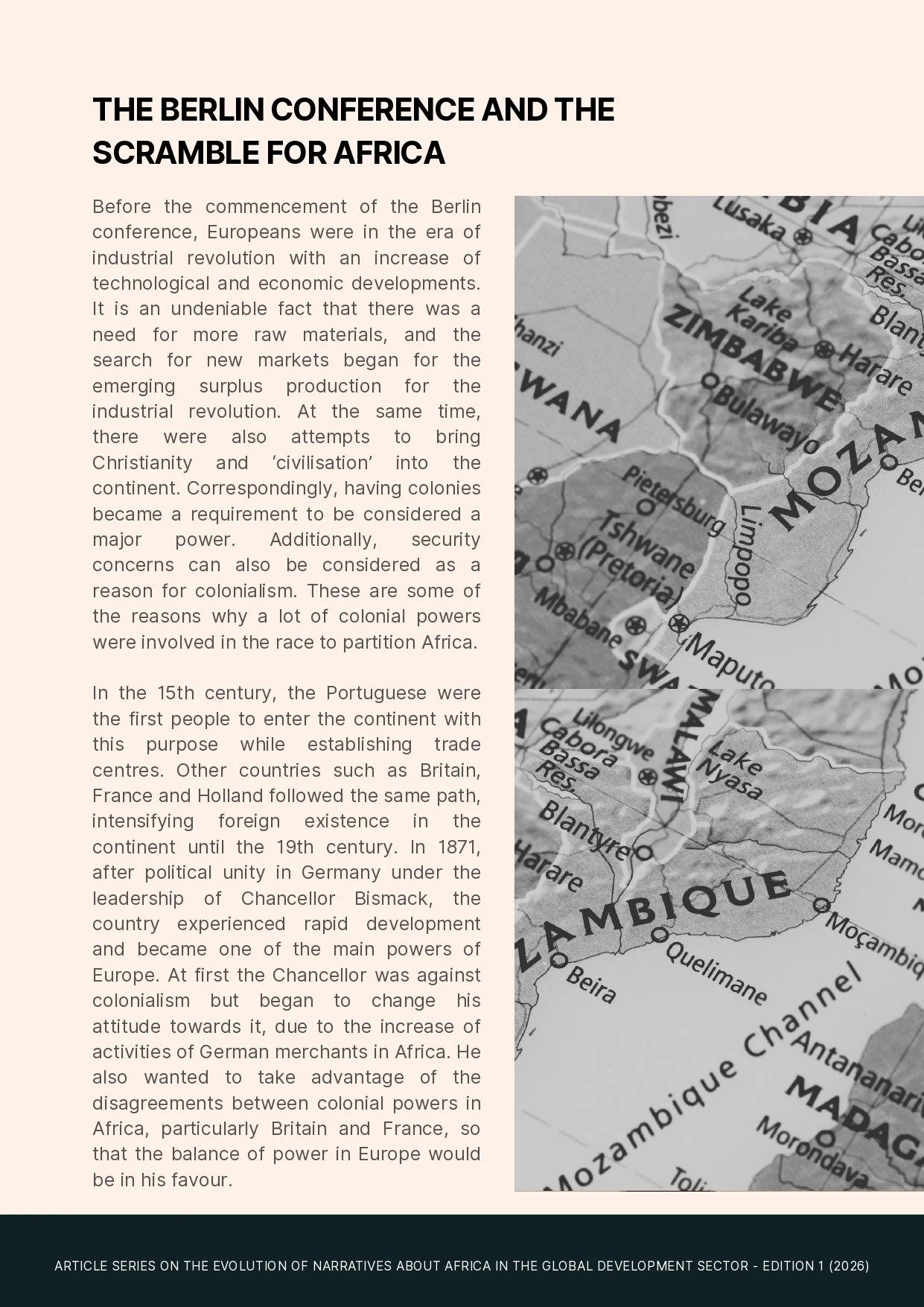
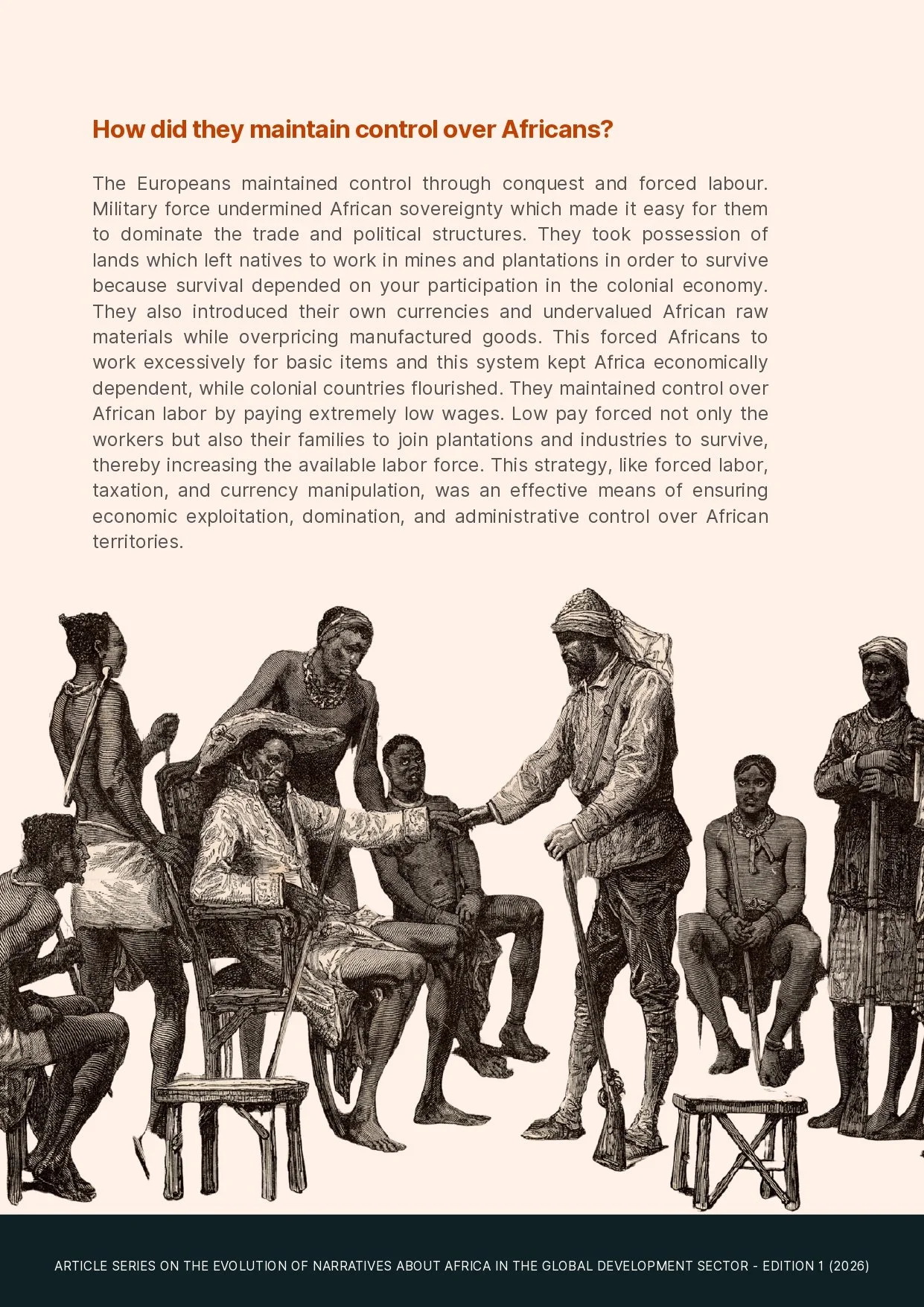
Luba Soyei opens the series at the beginning: the Berlin Conference of 1884–85, where European powers partitioned an entire continent without a single African voice in the room. The article traces how those arbitrary borders and the logic of colonial rule, the “Scramble for Africa,” divide-and-rule strategies, and the dismantling of sophisticated pre-colonial societies created political and economic fault lines that persist to this day. Colonialism, as argued, was not a historical episode with a clean endpoint; its legacies continue to shape African governance, conflict, and sovereignty in ways that any honest account of the development sector must reckon with.
To download using link click ‘File’>'Download’